Published August 19, 2026 · Updated August 19, 2026
How to Choose Between Fixed, Upward, Telescopic, and Large-Inclination Conveyors
The route and production method usually separate the major conveyor families before width, speed, power, and component details are calculated.
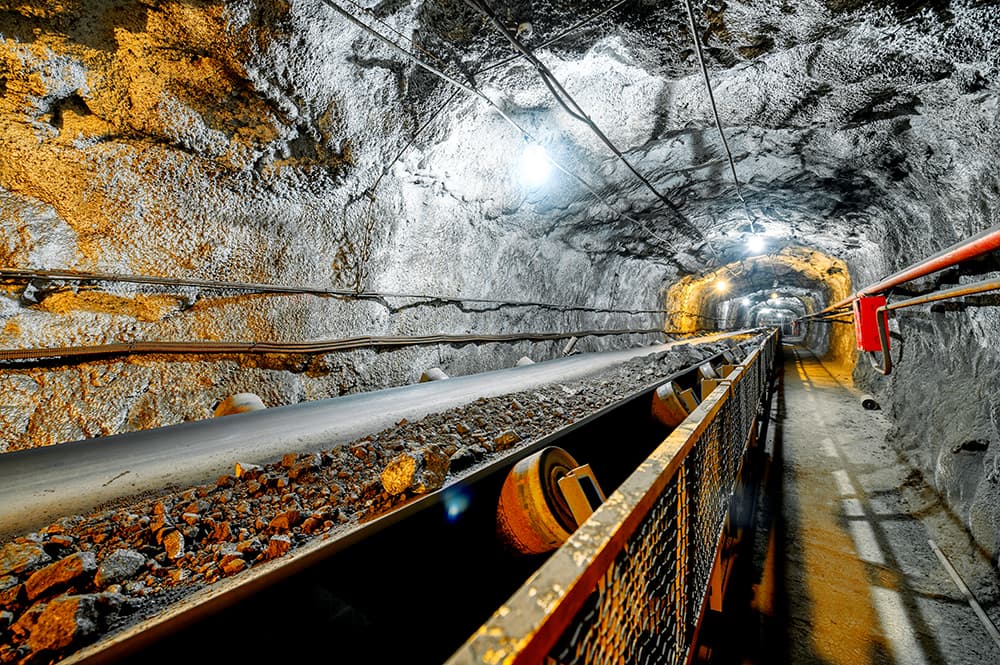
Underground conveyor route used to compare belt conveyor families
/images/dtl-underground-belt-conveyor.jpg
Start with the route and operating method
A stable surface or plant route usually points toward a fixed conveyor. An underground route with meaningful vertical lift adds braking, backstop, and rollback questions. An advancing working face creates a length-change problem. A steep route introduces material-retention and transition constraints.
| Family | Typical planning condition | Early technical focus |
|---|---|---|
| TD75 | Standard fixed bulk-material route | Width, capacity, length, loading, environment |
| DTII(A) | Higher-duty fixed project with complete system engineering | Drive, belt, take-up, structure, transfer interfaces |
| DTL upward | Underground or mine route with vertical lift | Gradient, tension, brake, backstop, protection |
| Telescopic | Working face or loading point advances | Length range, belt storage, take-up, relocation |
| DTC large-inclination | Steep route with limited footprint | Material stability, belt form, loading, stopping |
Treat series names as the start of a design discussion
A series label does not close the system. Material, route, capacity, duty, power, controls, standards, and site interfaces still determine the final configuration and released model.
Compare complete scope
Compare quotations line by line for belt, idlers, pulleys, drive, take-up, brake, backstop, cleaning, chutes, guards, switches, controls, structure, walkways, covers, spares, documents, inspection, packing, and installation support.